
Canada’s progress on climate adaptation too slow, unfocused, say experts: ‘we have to get moving’

The Liberal government's progress report on its National Adaptation Strategy presents a number of “questions marks” on Canada’s preparedness for extreme weather, according to experts, who say the country urgently needs a more targeted approach to climate adaptation.
“There are many question marks about the state of our progress, and even where the report does talk about actual measured progress on certain targets, it indicates that we're behind,” Ryan Ness, research director of adaptation at the Canadian Climate Institute, said of the feds’ progress report on the National Adaptation Strategy (NAS), released last month.
The August report details progress on meeting targets laid out in NAS, which was first released three years ago. Some targets—such as increasing Canadians’ awareness of risks facing their household, and identifying and supporting ecological corridors—were achieved, but other targets were not.
According to the report, 92 per cent of Canadians are aware of the risks facing their household, and 27 ecological corridor projects were supported by the feds. The government also reports that all health regions are now implementing “evidence-based” adaptation measures to protect Canadians from extreme heat.
But, Blair Feltmate, a professor at the University of Waterloo, and head of the Intact Centre on Climate Adaptation, told The Hill Times it’s the “more important” targets that aren’t being met.
One of those unmet targets is conservation. Only 14 per cent of Canada’s lands and 15.5 per cent of Canada’s oceans have been conserved, despite an interim target of conserving 25 per cent of both by 2025 to reach the ultimate goal of 30 per cent in 2030, the report reads. Prime Minister Mark Carney (Nepean, Ont.) recently committed to that goal in his government's nature strategy, released at the end of March.

And, though 92 per cent of Canadians are aware of the risks facing their homes, only 30 per cent have taken steps to respond to those risks. That’s one of the targets that Feltmate said is crucial.
“Preparedness for homes for flood and wildfire—this should be a priority for the country,” Feltmate stressed. “This is a target that we should not be missing, but we are.”

Feltmate also pointed to the need to improve the country’s flood maps—which he said are not up to date, nor user friendly—and retaining natural infrastructure, as targets where progress needs to improve.
“These three areas where we're missing, to my mind, this is where the rubber hits the road,” he said.
Feltmate explained that up-to-date and accessible flood maps could influence building developments, and help identify where Canada should be investing in long-term builds.
“We also need to anticipate with forward-looking flood risk maps: where is the water going to be 25 or 50 years down the road?” he explained.
The NAS sets a 2028 goal for having at least 200 “higher-risk” flood areas with new flood maps. The report reads that 50 per cent of those areas are currently covered by maps through the Flood Hazard Identification and Mapping Program. The report also says that 94 per cent of people in high-risk flood areas don’t know their property is at risk for flooding.
Environment and Climate Change Canada is responsible for overseeing the NAS. On Sept. 3, the department also released its second Canada’s Changing Climate report, which details the current effects of climate change in Canada. The report is a component of the feds’ Adaptation Action Plan, aimed at increasing public and government access to reliable climate information.
NAS isn’t the ‘right framework’: Canadian Climate Institute
But Ness said the NAS “isn’t really set up to show” whether Canadians are less at risk of big climate change threats, like extreme weather, as the framework itself is flawed.
“Unfortunately, the National Adaptation Strategy doesn't have the right framework of targets to measure whether or not we’re actually reducing Canadians' risk and danger to the biggest climate threat,” he said.
He said the strategy should identify the biggest climate risks, and then set specific, targeted goals for what an adapted Canada would look like. For example, Ness said, if the government wants to reduce wildfire risks to homes, they ought to set a target of wanting to reduce the number of homes at risk, and then design programs to achieve that goal—but that’s not the current approach.

“The national adaptation strategy is a long list of virtually all of the things that Canada can do to adapt to climate change,” Ness said. “Yet … they pose different levels of danger and risk, and have different timeframes in terms of when they will, and when they will affect Canada. We can't do everything all at once.”
He said, “We have to get moving.”
“We know what the highest risks are. Government can choose those priority areas and really go after those in the short term with meaningful programs, meaningful levels of investment.”
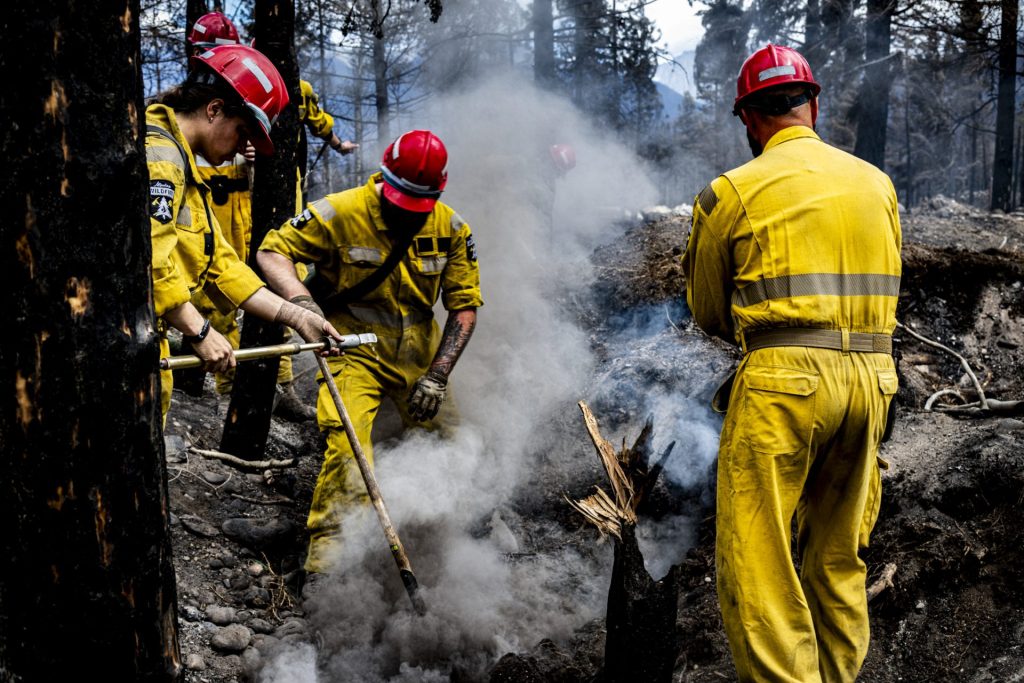
In recent years, Canada’s wildfire seasons have grown drier and longer. In 2023, Canada’s most destructive wildfire season on record, 232,000 Canadians were forced to evacuate as 17.3 million hectares of land burned. The next year, 2024, was also the costliest year on record for extreme weather insurance claims, according to Statistics Canada, resulting in $9.1-billion in claims.
Feltmate explained the costs associated with extreme weather are going up curvilinearly, and it’s because not enough money is being invested in adaptation measures.
He noted that from 2015 to 2024, Canada has spent $160-million dollars on mitigating or lowering greenhouse gas emissions, but only $6.7-million on adaptation in the same period.
“Extreme weather is going to get more extreme going forward, and every day that we don't prepare or adapt is a day we don't have,” Feltmate said.
Adaptation outcomes ‘hard to monitor,’ says resource centre director
Still, Ewa Jackson, director of the Ontario Resource Centre for Climate Adaptation, said outcomes of adaptation measures are “hard to monitor.”
“We're trying to measure progress about something not happening,” she said. “The fact that an area didn't flood may be because of interventions that were put in, but it might also be because that's not where the storm was that year.

Jackson added that targeted adaptation is difficult at the national scale, as it’s localized, and that provincial, territorial, and local governments should be the ones working to implement focused solutions.
“The federal role is … to be that connective tissue to make sure that we're all kind of working towards the same end,” she said, “but the specific ways that adaptation plays out has to be locally defined and locally relevant.”
Feltmate said that Canada is in a “good news, bad news” situation when it comes to preparedness for extreme weather, as the solutions are known, it’s just that they’re not being instituted quickly enough.
“To a large extent, we know what the problems are. We know where they're going to manifest,” Feltmate said. “Also, to a large extent, we know the actions to be taken to mitigate the risk. … The problem is we're not applying known solutions to known problems nearly quickly enough.”
He said that more education is needed on flood and wildfire home protection, pointing to simple steps like checking basements' pumps and removing flammable fencing and shrubbery from around fire-prone homes.
Jackson said it's implementation where Canada is falling behind.
“There's a lot of assessment happening,” she said, “a lot of work being undertaken to understand floodplains and the areas that are going to change from a physical science perspective, but … what is not tracking are the actions, the shovel-in-the-ground program initiatives.”
She pointed to the storm that shook much of the Greater Toronto Area on Sept. 2, resulting in significant damage to Toronto’s Rogers Stadium and a number of homes.
“Our infrastructure can’t withstand that right now, and so we need to be designing to a different standard and upgrading and building new.”
ewand@hilltimes.com
The Hill Times