
Canada cannot secure freshwater while overlooking groundwater

Canada speaks of freshwater as though abundance were guaranteed. It is not. Water sustains our communities, ecosystems, farms, industries, and economy, yet the country is entering a period of deeper droughts, larger floods, more intense wildfires and growing competition for reliable supply. One of Canada’s most important freshwater assets remains largely invisible in national policy: groundwater.

The House Environment and Sustainable Development Committee has placed freshwater squarely on the national agenda through its report, Sustaining Canada’s Freshwater for Today and Tomorrow. It recognizes what some water experts have long warned: groundwater is under-measured, under-governed, under-appreciated, and under threat. The question is whether Canada is prepared to govern it seriously before crisis forces our hand.
For too long, public focus has been on the water we can see: rivers, lakes, wetlands, snow, and ice. Beneath our feet, aquifers provide drinking water to millions of Canadians, support farms and industries, sustain streams during dry periods, and protect ecosystems when surface water is stressed. Rural communities across Canada depend on private wells; and many Indigenous communities depend on groundwater as the safest or most practical source. Because it is out of sight, groundwater has too often been left out of policy.
That is no longer defensible. Climate change is altering Canada’s water cycle: droughts are becoming more severe in some regions, floods more destructive in others, wildfires more frequent and glacial meltwater less reliable. In these conditions, groundwater can be a strategic climate-resilience asset. It can also be depleted, contaminated, or mismanaged if governments do not know how much is available, where recharge occurs, or how surface water and groundwater are connected.
Canada’s challenge is governance. Provinces and territories regulate water allocation, professional practice, and most land-use decisions. Municipalities plan growth and infrastructure. Indigenous governments hold inherent rights and knowledge central to water guardianship. The federal government has responsibilities for science, transboundary waters, fisheries, Indigenous water rights, health, agriculture, climate adaptation, and environmental protection. No single order of government can manage groundwater alone; however, federal leadership can make the system more coherent.
First, Canada should explicitly include groundwater in federal freshwater management, policy, legislation, and programs. Too often, “freshwater” is treated as though it means only surface water. The Canada Water Act, the Canada Water Agency, and federal freshwater science should make groundwater visible, measurable, and integral to watershed management.
Second, Canada needs a national groundwater data and monitoring framework. Many aquifers remain poorly mapped, monitoring networks are uneven and data standards vary. Federal support for long-term monitoring, aquifer mapping, and open data would help provinces, territories, Indigenous governments, and communities anticipate shortages, protect drinking water, and assess cumulative impacts from agriculture, mining, energy development, and urban growth.

Third, groundwater expertise must be embedded across federal decision-making. Hydrogeology is essential to assessing infrastructure, agriculture, contaminated sites, drinking water, cumulative effects, and climate adaptation. Key federal departments and the Canada Water Agency need to build and maintain the expertise required to understand aquifers and how land-use decisions affect water underground.
Fourth, federal governance should rely on accountability systems already maintained by provincial and territorial professional geoscience regulators as they license professional hydrogeologists—these regulators maintain qualified practice, ethical standards, continuing competence mechanisms, and disciplinary oversight. This would strengthen reliability and accountability without creating a new bureaucracy.
Fifth, Indigenous groundwater security must be co-developed, not imposed. Indigenous Peoples are rights-holders, knowledge keepers, and water guardians. Federal investments should support Indigenous-led monitoring, source-water protection, infrastructure, training, and governance capacity. Clean drinking water is a matter of dignity, rights, and reconciliation.
Finally, Canada should protect recharge areas before they are paved, polluted, or fragmented. Wetlands, forests, grasslands, and permeable landscapes replenish aquifers and sustain rivers and streams. Federal infrastructure, agricultural, and climate-adaptation funding should encourage communities to map and protect these areas as natural infrastructure.
The way forward requires political will, sustained funding and a mindset shift. The committee has started an important national conversation by recognizing the key role of groundwater and advancing recommendations to strengthen its governance and protection. Governments should now build on that foundation by implementing those recommendations before growing climate and water security challenges make the costs of inaction increasingly difficult to ignore.
Amanda Sills serves as principal hydrogeologist and director of operations at Geocentric Environmental Ltd. She is also the founding staff member of The Groundwater Project, a registered Canadian charity dedicated to advancing global education by providing free, expert-led groundwater education to learners worldwide.
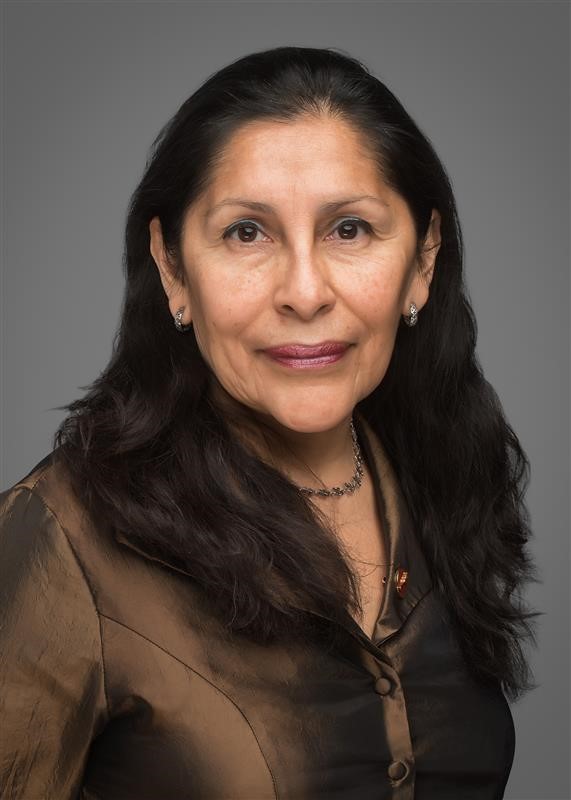
Rosa Galvez is a civil-environmental engineer and an Independent Senator for the province of Quebec.
The Hill Times